

July 23, 2026
If you were asked to name the warning signs of a serious cardiovascular issue, you might picture chest pain, shortness of breath, or sudden dizziness. But when it comes to one of the most common threats to your heart—hypertension, or high blood pressure—there are usually no physical symptoms at all.
Known globally as the “silent killer,” high blood pressure can quietly damage your blood vessels for years without you ever feeling a thing. By the time symptoms actually do appear, significant cardiovascular damage may have already occurred.
At Community Internal Medicine, Dr. Samuel Wu and our medical team emphasize that proactive, precise detection is your best line of defense. Relying purely on how you feel can leave you vulnerable. To truly safeguard your cardiovascular health, accurate and consistent monitoring is essential.
Why High Blood Pressure Frequently Goes Unnoticed
Your body is remarkably adaptable. When blood pressure rises, your blood vessels and heart work harder to circulate blood. Over time, your body adapts to this high-pressure state, making it feel entirely “normal.”
Because high blood pressure does not typically cause headaches, fatigue, or chest discomfort in its early to moderate stages, millions of adults live with untreated hypertension without realizing it. Under the surface, however, this constant, excessive force micro-damages the delicate inner linings of your arteries. Left unaddressed, this silent strain dramatically increases your risk for:
- Heart attacks and coronary artery disease
- Strokes and transient ischemic attacks (TIAs)
- Kidney damage or chronic kidney disease
- Vision loss and vascular dementia
Because you cannot feel your blood pressure rising, clinical measurement is the only definitive way to know your numbers.
The Discrepancy: Office Readings vs. Home Measurements
Many patients believe that having their blood pressure checked once or twice a year during a standard checkup is enough. However, a single reading in a clinical setting only offers a brief snapshot in time. In fact, blood pressure naturally fluctuates throughout the day based on stress, caffeine, physical activity, and even anxiety.
This variability often leads to two very common clinical discrepancies:
- White-Coat Hypertension: This occurs when a patient’s blood pressure spikes during an office visit due to the stress or anxiety of being in a medical environment, even though their readings are perfectly normal at home.
- Masked Hypertension: A more dangerous scenario where blood pressure reads as normal in the doctor’s office, but spikes to unhealthy levels during normal daily activities or during sleep.
If a physician relies solely on a single office reading, they might overprescribe medication for someone with white-coat hypertension, or completely miss the cardiovascular risks of someone with masked hypertension. This is why consistent, real-world monitoring is vital.
How Ambulatory Blood Pressure Monitoring Provides a Clearer Picture
To bypass the limitations of single office readings, Dr. Wu utilizes advanced diagnostic tools to capture a comprehensive view of your cardiovascular system. One of the most effective methods we offer is Ambulatory Blood Pressure Monitoring (ABPM).
+—————————————+
| How 24-Hour Ambulatory Blood |
| Pressure Monitoring Works |
+—————————————+
|
+———————–+———————–+
| |
v v
+———————–+ +———————–+
| Daytime Monitoring | | Overnight Monitoring |
| • Measures every | | • Measures during |
| 15-30 minutes. | | sleep cycles. |
| • Captures real-life | | • Detects critical |
| stress & activity. | | “non-dipping” patterns.|
+———————–+ +———————–+
With ABPM, you wear a small, lightweight monitor and cuff for a full 24-hour period while going about your normal daily routine and sleeping. The device automatically measures and records your blood pressure at set intervals.
This continuous data allows Dr. Sam Wu to analyze your average blood pressure over 24 hours, see how it reacts to daily stressors, and—crucially—evaluate your “nocturnal dipping”. Normally, blood pressure drops during sleep. If your blood pressure does not dip at night, it indicates a significantly higher risk of stroke and heart disease, a detail that a standard daytime office check would never reveal.
Comprehensive Cardiovascular Services at Community Internal Medicine
Managing high blood pressure is not just about keeping a log of numbers; it is about protecting your entire cardiovascular and arterial system. At Community Internal Medicine in Gilroy, we go beyond basic screenings to offer specialized in-house diagnostic services designed to catch issues before they turn into emergencies:
- Heart Disease and Stroke Prevention: Tailored risk-assessment programs focused on lifestyle modifications, diet, and targeted medical therapies.
- Carotid Plaque Detection: A specialized, non-invasive ultrasound technique that checks for dangerous cholesterol and fatty blockages in the carotid arteries, helping to prevent strokes.
- In-House Cardiodynamic Monitoring (Bio-Z): An advanced diagnostic tool that measures cardiac output and fluid status, allowing us to customize medication therapies with high precision.
- In-House EKG & 24-Hour Holter Monitoring: To continuously trace your heart’s electrical rhythm and detect underlying arrhythmias or silent strain.
By integrating these comprehensive, state-of-the-art services, Dr. Sam Wu provides a highly personalized approach to managing hypertension and preserving your long-term wellness.
Take Control of Your Heart Health Today
Don’t wait for symptoms to appear before you start paying attention to your cardiovascular system. If you are looking for highly accurate, professional blood pressure monitoring in Gilroy, the team at Community Internal Medicine is here to help.
Under the expert care of board-certified physician Dr. Samuel Wu, we utilize advanced cardiac diagnostics to help you understand your unique health profile and build a personalized plan to keep your heart strong. Protect your future self. Contact Community Internal Medicine today to schedule your comprehensive cardiovascular assessment.
Frequently Asked Questions (FAQ)
If you have normal blood pressure (under 120/80 mmHg), checking it at least once a year during an annual physical is standard. However, if you have risk factors such as a family history of heart disease, diabetes, or previous high readings, more frequent home monitoring is highly recommended.
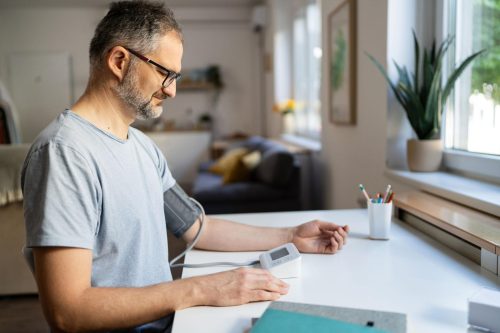
A standard home blood pressure monitor requires you to sit still and manually take a reading, which only captures isolated moments. Ambulatory blood pressure monitoring automatically tracks your blood pressure continuously across a full 24-hour cycle—including while you work, eat, move, and sleep—providing a much more accurate representation of your true cardiovascular burden.
In many cases of mild or early-stage hypertension, lifestyle changes—such as a low-sodium diet, regular aerobic exercise, stress reduction, and maintaining a healthy weight—can successfully lower blood pressure. However, for moderate to severe hypertension, a combination of lifestyle changes and medical treatment is often necessary to safely protect your organs.